You Won’t Believe What I Found Hiking Near Neuschwanstein Castle
You know that feeling when you think you’re just visiting a fairytale castle, but then stumble upon something even more magical? That’s exactly what happened when I hiked around Neuschwanstein in southern Germany. Beyond the crowds and postcard views, the natural landscapes surrounding the castle blew me away—lush forests, misty meadows, and quiet trails with jaw-dropping alpine panoramas. This is way more than a castle trip—it’s a nature lover’s dream. While many come solely to glimpse King Ludwig II’s architectural fantasy, few realize how much deeper the experience becomes when you step off the main path and into the wild embrace of the Bavarian Alps. The true magic isn’t only in the spires—it’s in the silence between the trees, the shimmer of lakes below, and the crisp air that fills your lungs as you climb toward hidden vantage points. This journey is not just about sightseeing. It’s about rediscovering wonder.
Arrival & First Impressions
Traveling to Neuschwanstein Castle from Munich is both straightforward and scenic, taking just under two hours by car or regional train. As the urban sprawl gives way to rolling hills and dense woodlands, the landscape begins to feel more storybook than real. The final approach winds through the charming town of Füssen, a picturesque Bavarian village with colorful facades, flower-box windows, and the distant silhouette of mountains framing the horizon. From here, most visitors board the shuttle bus or opt for the traditional horse-drawn carriage ride up the steep forested path leading to the castle entrance. The anticipation builds with every turn.
And then, suddenly, there it is—Neuschwanstein Castle, perched dramatically on a rugged hilltop, its pale towers and turrets rising above a sea of green treetops. The sight is undeniably breathtaking, even if you’ve seen it a thousand times on postcards or as the inspiration for Disney’s Sleeping Beauty Castle. There’s a moment of awe, a pause in breath, as the full scale and romantic grandeur of the structure come into view. Yet, for all its visual power, something feels slightly removed—like observing a masterpiece behind glass. The ticket center buzzes with voices in dozens of languages, the lines snake across paved walkways, and the constant click of cameras fills the air. It’s easy to feel like just another visitor in a long line of admirers.
It was in that moment of mild sensory overload that the urge to step away took hold. What lies beyond the official pathways? Are there places where the mountain air isn’t mingled with tour group chatter? The answer, it turns out, is a resounding yes. Just a short walk from the main viewing platform, the paved paths give way to dirt trails, the crowds thin, and the forest reclaims its quiet. That transition—from tourist hub to tranquil wilderness—is where the real journey begins. The castle may draw you in, but the landscape keeps you there.
The Hidden Trails That Changed Everything
One of the most transformative moments of the trip came not from inside the castle’s opulent halls, but from a simple detour along a narrow footpath leading away from Marienbrücke, the famous bridge offering the classic photo angle of Neuschwanstein. While most tourists cross the bridge, snap their pictures, and head back, a lesser-known trail veers off to the left, marked subtly with a wooden sign and a numbered route. This path, winding through thick pine forest and rocky outcrops, opens into a series of elevated viewpoints that few seem to reach.
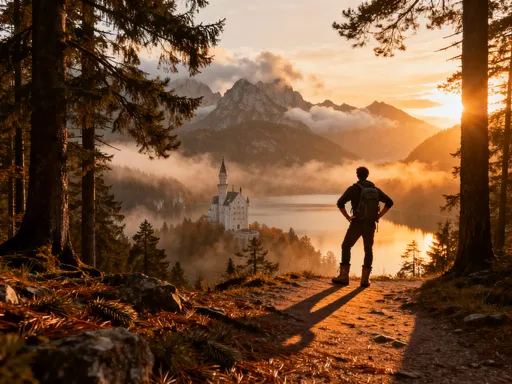
Within twenty minutes of walking, the sounds of the crowd faded completely. The only noises were the rustle of leaves, the distant call of a woodpecker, and the soft crunch of boots on gravel. The air grew cooler and cleaner, carrying the sharp, invigorating scent of pine resin and damp earth. As the trail climbed gently, the trees parted, revealing a sweeping panorama: the deep blue waters of Alpsee Lake nestled in the valley below, its surface mirror-smooth in the morning light, reflecting the surrounding peaks and the distant outline of the castle like a dream. To the north, the larger Forggensee shimmered under scattered clouds, its shoreline dotted with reeds and wild grasses.
What struck me most was the contrast—how, just a few hundred meters from one of Europe’s most photographed landmarks, such solitude could exist. These trails are not secret in the sense of being hidden or forbidden; they are simply overlooked. Waymarked with the standard Bavarian hiking symbols and maintained by local authorities, they are accessible to anyone with moderate fitness and a sense of curiosity. No special permits are needed, no guided tours required. Just the willingness to walk a little farther. Along the route, wooden benches appear at intervals, placed thoughtfully at viewpoints, inviting pause and reflection. It’s clear that these paths are designed not just for movement, but for connection—with nature, with silence, with the deeper spirit of the place.
Why Nature Steals the Show
There’s no denying Neuschwanstein’s architectural beauty. Its fairy-tale silhouette, inspired by medieval romances and Wagnerian opera, is a marvel of 19th-century romanticism. King Ludwig II, the reclusive monarch who commissioned it, envisioned a personal refuge—a sanctuary where art, nature, and imagination could merge. And while the interior showcases lavish craftsmanship, from intricately carved woodwork to murals depicting Arthurian legends, the true fulfillment of his vision lies not within the castle walls, but in the landscape that surrounds it.
Ludwig didn’t choose this location for its convenience or political significance. He chose it for its wild beauty. The jagged peaks, the deep forests, the lakes that glow silver in the moonlight—these were the real inspiration. The castle was never meant to dominate the landscape, but to harmonize with it, to be a part of the natural drama unfolding in the Alps. When viewed from the hidden trails, Neuschwanstein doesn’t overpower the scenery—it becomes a character within it, like a knight’s keep in an epic poem. Framed by autumn foliage or rising from a blanket of morning mist, it feels alive, integrated, poetic.
This synergy between built and natural environments transforms the experience from mere sightseeing into something more profound. Standing on a quiet hillside, watching the sun gild the castle’s towers while a hawk circles above the valley, one begins to understand Ludwig’s longing for escape. The beauty of the place isn’t just visual—it’s emotional, almost spiritual. The mountains offer perspective. The forests offer stillness. And in that stillness, the castle, often reduced to a tourist icon, regains its original meaning: a monument to dreams, solitude, and the enduring power of nature to inspire.
Seasonal Shifts: When to Go for the Best Experience
The character of the Neuschwanstein region shifts dramatically with the seasons, each offering a distinct kind of beauty and a different pace of visitation. Spring, from late April to early June, brings a soft renewal—meadows dotted with wildflowers, streams swollen with snowmelt, and trees unfurling their first tender leaves. The air is fresh, the trails less crowded, and the sense of discovery heightened by the season’s quiet energy. It’s an ideal time for those who appreciate subtlety over spectacle.
Summer, particularly July and August, is the peak season. The days are long, the weather generally warm and stable, and the landscape lush and vibrant. However, this is also when the castle sees its highest volume of visitors. To avoid the worst of the crowds, arriving by 8:00 a.m. makes a significant difference. Early morning light also enhances photography, with soft shadows and golden tones. For hikers, summer offers the most accessible trail conditions—no snow, clear signage, and extended daylight for longer routes. Still, midday can bring bus tours in waves, so planning outdoor exploration for the morning or late afternoon ensures greater peace.
Autumn, from late September to early November, is arguably the most magical time to visit. The forests ignite in shades of amber, crimson, and gold, and the air carries a crisp, invigorating chill. Fog often rolls through the valleys in the morning, creating ethereal scenes where the castle appears to float above the clouds. Crowds diminish after the summer rush, and weekday visits during this period can feel nearly private. The contrast of colorful foliage against the pale stone of the castle is unforgettable, and the reflection of both in the still waters of Alpsee is a sight that lingers in memory.
Winter transforms the region into a serene, snow-covered retreat. While some trails may be icy or require proper footwear, the quiet is unparalleled. On clear days, the snow glitters under sunlight, and the castle stands in stark, dramatic contrast against a blue sky. Fewer tourists brave the colder months, making it the best season for solitude. However, visitors should check trail conditions in advance and dress appropriately—layered clothing, waterproof boots, and traction devices for shoes are essential. Regardless of season, one rule holds true: the earlier you arrive, the deeper the connection you’ll feel to the landscape.
Balancing Tourism and Tranquility
Neuschwanstein is one of Germany’s most visited landmarks, attracting over 1.4 million visitors annually. With such popularity comes infrastructure—shuttle buses, ticketing systems, gift shops, and guided tours—all designed to manage the flow. While these services make access easier, they also risk turning the experience into a checklist item rather than a meaningful journey. The key to avoiding this lies in intentionality. By shifting the focus from consumption to immersion, travelers can reclaim a sense of discovery even in a well-trodden destination.
One effective strategy is to limit the time spent inside the castle. While the interior is impressive, the guided tours are brief—typically 30 to 35 minutes—and highly regulated. For many, this short visit is sufficient to appreciate the craftsmanship without feeling rushed. The real value, however, lies in what comes after. Instead of returning directly to Füssen, consider dedicating the rest of the day to hiking. Local bus routes connect key trailheads, including those near Alpsee and Hohenschwangau, allowing visitors to explore different angles of the landscape without needing a car.
Another powerful tool is timing. Arriving early not only avoids crowds but also aligns with the natural rhythm of the mountains—cooler temperatures, softer light, and heightened wildlife activity. Weekday visits, especially outside of German school holidays, further reduce congestion. Travelers who treat the region as a destination for walking, reflection, and connection—rather than just photo opportunities—often leave with a far richer experience. The landscape rewards patience and presence. It invites slowness. And in that slowness, the magic reveals itself.
What to Pack for the Perfect Day
One of the most common mistakes visitors make is underestimating the terrain. Neuschwanstein may look accessible from a distance, but the area involves significant elevation changes, uneven paths, and unpredictable weather. Comfortable walking shoes are not just recommended—they are essential. Regular sneakers or fashion footwear may suffice for the paved areas near the castle, but once you venture onto forest trails or rocky ridges, sturdy hiking shoes with good grip and ankle support make all the difference.
Layered clothing is another must. The temperature can vary by 15 to 20 degrees Fahrenheit between the valley and higher elevations. A moisture-wicking base layer, a lightweight insulating mid-layer, and a wind- or waterproof outer shell provide flexibility no matter the conditions. Even in summer, a light jacket is wise—mountain breezes can be surprisingly cool, especially near lakes or in shaded forests.
Carrying a small backpack with water, a light snack, and a fully charged phone is highly advisable. There are limited refreshment options along the trails, and while the distances aren’t extreme, hydration and energy matter when walking for several hours. Avoid overpacking—this isn’t a multi-day trek—but do prioritize preparedness. A compact rain cover for your bag, a basic first-aid item, and a paper map (as a backup to digital navigation) add peace of mind. Sunscreen and a hat are also smart choices, particularly in summer or on snow-covered trails where sunlight reflects intensely.
Finally, leave the heavy tourist gear at home. You don’t need a large suitcase, multiple camera lenses, or bulky accessories. The best experiences come from being present, not from capturing every moment. A simple setup—camera or phone, water, and snacks—allows you to move freely and focus on the journey itself.
A Deeper Connection to Place
Travel at its best doesn’t just show us new places—it changes how we see the world and our place in it. The most memorable moments from my visit to Neuschwanstein weren’t the photos I took or the facts I learned. They were the quiet pauses: sitting on a sun-warmed rock by Alpsee, watching the castle’s reflection ripple in the water; hearing the distant chime of cowbells from a high meadow; breathing in the silence so deep it feels like time has stopped.
These are the moments that linger. They don’t come from rushing through checklists, but from allowing space for stillness and surprise. When history and nature intertwine so completely, the experience becomes layered, emotional, personal. You begin to feel not just like a visitor, but like a participant in a story much larger than yourself. King Ludwig may have built a castle to escape the modern world, but today, the surrounding wilderness offers that same gift—to anyone willing to walk a little farther, rise a little earlier, and listen a little more closely.
That deeper connection is what transforms a good trip into a great one. It’s not about how many sights you see, but how deeply you feel the presence of a place. In the shadow of Neuschwanstein, where myth and mountain meet, such moments are not rare—they are waiting, just off the path, in the whisper of the wind and the glint of sunlight on water.
Neuschwanstein Castle isn’t just a monument to romantic fantasy—it’s a gateway to one of Germany’s most breathtaking natural regions. The real story isn’t only in the towers and turrets, but in the forests, lakes, and trails that cradle it. By stepping off the beaten path, travelers don’t just see more—they feel more. This is what travel should be: surprising, serene, and deeply human. If you go, let the landscape lead the way.