You Won’t Believe How Parisian Architecture Transforms Shopping Into Art
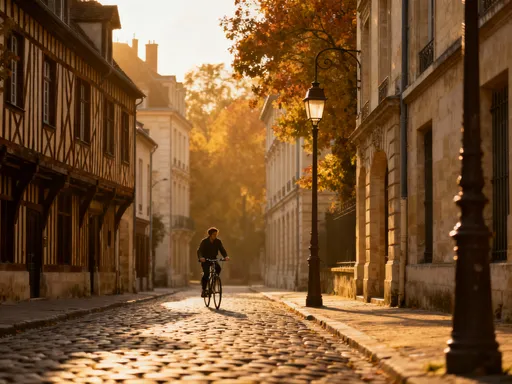
Walking through Paris, I realized something unexpected—shopping here isn’t just about buying things. It’s a full sensory experience, where every boutique feels like a masterpiece. The city’s unique architecture—ornate facades, iron-laced balconies, hidden courtyards—turns simple strolls into visual feasts. From designer boutiques in glass-walled galleries to vintage stores tucked beneath historic arches, Paris blends style and structure like nowhere else. This is retail elevated to art.
The Fusion of Fashion and Facades
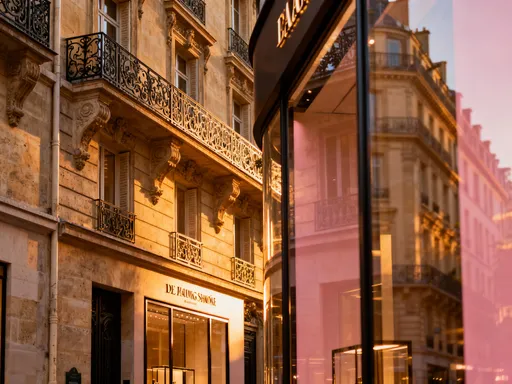
Parisian shopping is not confined to the act of purchasing—it unfolds as a dialogue between fashion and façade, where the streets themselves serve as curated galleries. In neighborhoods like Le Marais and Saint-Germain-des-Prés, centuries-old buildings have been thoughtfully repurposed into high-end retail spaces, preserving their historic character while embracing modern design. The Rue du Faubourg Saint-Honoré, for instance, is lined with 18th-century hôtels particuliers—private mansions with symmetrical stone facades and wrought-iron gates—that now house flagship stores for Hermès, Lanvin, and other luxury houses. These buildings were once homes to aristocrats; today, they offer an equally refined experience, where craftsmanship in fashion mirrors craftsmanship in architecture.
What makes this fusion so powerful is the city’s unwavering commitment to aesthetic continuity. Unlike commercial districts in other global cities where glass towers overshadow heritage structures, Paris enforces strict building codes that maintain visual harmony. Storefronts must respect the proportions and materials of their original design, ensuring that even the most contemporary brands integrate seamlessly into the urban fabric. This architectural restraint enhances the shopping mood, transforming each visit into an immersive cultural journey rather than a transactional errand. When a shopper steps into a boutique framed by limestone carvings and gilded details, they are not just browsing clothes—they are stepping into a living museum of design.
The psychological impact of this harmony is profound. Studies in environmental psychology suggest that aesthetically coherent environments reduce stress and increase feelings of well-being. In Paris, this translates to a shopping experience that feels deliberate, unhurried, and deeply satisfying. The architecture does not compete with the merchandise; it complements it. A Chanel handbag displayed behind a restored 19th-century window feels more valuable not just because of its price tag, but because of the context in which it is presented. This subtle synergy elevates perception, making Parisian shopping less about consumption and more about appreciation.
Glass, Stone, and Iron: Materials That Define Parisian Style
The sensory richness of Parisian shopping lies in its materials—limestone, wrought iron, and glass—each contributing to a tactile experience that engages sight, touch, and even sound. Limestone, the dominant building material in central Paris, gives the city its warm, honey-toned glow. Quarried from underground mines beneath the city, this stone was used extensively during the Haussmann renovations of the 19th century, creating the uniform façades that define Parisian elegance. Today, luxury retailers honor this tradition by restoring original stonework rather than replacing it, ensuring that each boutique maintains its authentic texture and depth.
Wrought iron, another hallmark of Parisian design, appears in balcony railings, gatework, and interior fixtures. Its intricate scrollwork adds a layer of artistry to even the most minimalist storefronts. On Avenue Montaigne, home to Dior, Louis Vuitton, and Valentino, many boutiques retain original iron balconies while introducing sleek glass interiors. This juxtaposition creates a compelling contrast—between the hand-forged curves of the past and the clean lines of modern design. The material itself tells a story of craftsmanship, one that resonates with shoppers seeking authenticity in an age of mass production.
Perhaps the most transformative material in contemporary Parisian retail is glass. Used in façades, skylights, and display cases, glass introduces transparency and light, dissolving the boundary between street and store. At the Louis Vuitton flagship on the Champs-Élysées, a curved glass façade reflects the surrounding architecture while revealing the interior like a stage set. Inside, glass staircases and illuminated vitrines create a sense of weightlessness, allowing products to float in space. This interplay of materials—stone for permanence, iron for artistry, glass for modernity—forms the foundation of Paris’s architectural identity in retail. It is a language of design that speaks to both heritage and innovation.
Hidden Courtyards and Secret Passages: Where Shopping Feels Like Discovery
Beyond the grand boulevards lie Paris’s best-kept retail secrets—covered passages that transport visitors to a quieter, more intimate version of the city. Built in the early 19th century, these arcades were among Europe’s first shopping malls, designed to protect shoppers from mud and rain while offering a refined alternative to open markets. Today, passages like Galerie Vivienne, Passage des Panoramas, and Passage Jouffroy have been revived as sanctuaries for independent designers, antique booksellers, and artisanal boutiques. Walking beneath their glass ceilings, with sunlight filtering through iron trusses onto mosaic floors, feels less like shopping and more like wandering through a private gallery.
Galerie Vivienne, constructed in 1823, is perhaps the most exquisite of these spaces. Its black-and-white tessellated floor, gilded signage, and domed skylight create a sense of theatrical elegance. Boutiques here are small and carefully curated, offering handmade jewelry, vintage fashion, and limited-edition perfumes. Because the passage is not easily visible from the street, discovery is part of the experience—visitors must seek it out, adding a sense of adventure to the journey. This intimacy fosters a different kind of consumer relationship, one based on curiosity rather than convenience.
Passage des Panoramas, slightly older and more understated, is renowned for its philately shops and historic cafés. Yet it also hosts emerging fashion labels and concept stores that thrive in the passage’s low-traffic, high-character environment. These arcades are not designed for fast fashion or high-volume retail; they reward slow exploration. The acoustics alone—muted footsteps on stone, the distant clink of café glasses—contribute to a tranquil atmosphere that contrasts sharply with the sensory overload of modern shopping malls. In these spaces, architecture does not merely house commerce; it shapes its pace and mood.
The revival of these passages reflects a broader shift in consumer values. Shoppers, especially those seeking meaningful experiences over mass-produced goods, are drawn to places that feel authentic and personal. Paris’s covered passages offer exactly that—a blend of history, craftsmanship, and human scale that cannot be replicated in chain stores or online platforms. They are living examples of how architecture can preserve cultural memory while adapting to contemporary needs.
Department Stores as Architectural Icons
No discussion of Parisian retail architecture would be complete without acknowledging its legendary department stores—Galeries Lafayette and Le Bon Marché—as feats of design as much as commerce. These are not merely places to shop; they are architectural landmarks that draw millions of visitors each year, many of whom come not to buy, but to witness the spectacle of their interiors. Galeries Lafayette, located on Boulevard Haussmann, is famed for its Art Nouveau dome, a soaring stained-glass ceiling that floods the central atrium with colored light. The grand spiral staircase, encircled by balconies lined with luxury boutiques, creates a theater-like setting where fashion is displayed as performance.
Originally opened in 1893, Galeries Lafayette was a pioneer in modern retail architecture, using iron and glass to create vast, open spaces that invited browsing. Its dome, restored in the 1990s, remains one of the most photographed interiors in Paris. The store hosts regular architectural tours, emphasizing its role as a cultural destination. Seasonal installations—elaborate holiday displays suspended beneath the dome—transform the space into a temporary art exhibit, further blurring the line between shopping and spectacle.
Le Bon Marché, established in 1852, holds the distinction of being the world’s first department store. Located in the Saint-Germain district, it occupies a series of interconnected buildings that have been expanded and renovated over time while preserving their 19th-century character. Its courtyard, now covered by a delicate glass canopy, hosts rotating art exhibitions and pop-up installations. Inside, the use of warm wood paneling, brass fixtures, and soft lighting creates an atmosphere of refined comfort. Unlike the opulence of Galeries Lafayette, Le Bon Marché exudes quiet sophistication, appealing to shoppers who value subtlety over showmanship.
Both stores exemplify how architecture can elevate retail into cultural experience. Their designs encourage movement, exploration, and停留—lingering. Shoppers are not rushed; they are invited to ascend staircases, peer over railings, and pause beneath skylights. In doing so, they engage with the space as much as the products. This architectural generosity reflects a deeper philosophy: that shopping, when done with care and beauty, can be a form of leisure, even art.
Neighborhoods That Tell Stories Through Storefronts
Paris’s diversity is best understood not through monuments, but through its storefronts. Each neighborhood expresses a distinct architectural personality, shaping the character of its retail landscape. In the Marais, 17th-century mansions with courtyards and stone arches now shelter concept stores and vintage boutiques. The area’s preservation status ensures that renovations remain sensitive to historical detail, resulting in shops that feel rooted in place rather than inserted. A perfume atelier in a converted hôtel particulier carries more weight because of its surroundings—the scent seems tied to the building’s history.
Contrast this with the Champs-Élysées, where neoclassical facades and wide sidewalks create a sense of grand procession. Stores here—Tiffany, Zara, Sephora—must meet strict aesthetic guidelines, ensuring that even fast-fashion brands contribute to the avenue’s formal rhythm. The architecture here is not intimate; it is ceremonial, designed for visibility and movement. Shopping becomes a public act, part of the city’s daily theater.
Further from the center, in neighborhoods like Canal Saint-Martin, a different story unfolds. Former industrial warehouses have been converted into raw, light-filled spaces housing independent designers, organic cafés, and craft workshops. Exposed brick, steel beams, and large windows define the aesthetic, reflecting a younger, more experimental spirit. Here, retail is less about luxury and more about authenticity, where the building’s history adds value to the brand.
Even quieter districts like Auteuil and Passy maintain their village-like charm, with low-rise buildings, flowered balconies, and corner bakeries. Shops here are small and family-run, their façades unchanged for decades. The architecture supports a slower pace of life, where shopping is woven into daily routine rather than treated as an event. Together, these neighborhoods illustrate how Paris uses architecture to diversify the shopping experience, offering everything from grand spectacle to quiet discovery.
Smart Shopping: How to Navigate Paris’ Architectural Gems
To fully appreciate Paris’s architectural retail landscape, a thoughtful approach is essential. The city rewards slow exploration, and the best experiences often come from walking rather than rushing. Begin in the Opéra district, where Galeries Lafayette and Printemps stand as twin icons of 19th-century department store design. Arrive early in the morning to avoid crowds and enjoy the dome’s light at its clearest. From there, walk down Boulevard Haussmann toward Place Vendôme, noting the uniformity of Haussmannian façades and the discreet entrances to luxury jewelers like Cartier and Boucheron.
Next, head to the Marais via the Sentier district, where 19th-century passages like Galerie Vivienne are clustered. Use the Métro—lines 3, 8, and 9 serve key areas—but exit early and walk the final stretch to notice architectural details often missed from underground. A recommended route connects Palais Royal, with its black-and-white colonnade by Daniel Buren, to Rue des Archives, where historic courtyards hide contemporary fashion boutiques. Many of these areas are best explored on foot, allowing time to pause, photograph, and step inside unassuming doorways.
For a deeper understanding, consider joining a guided architecture walk that includes retail spaces. Organizations like Paris Walks and Context Travel offer tours focused on urban design, explaining how building codes, historical preservation, and cultural values shape the city’s look. Some tours specifically highlight the relationship between fashion and architecture, visiting ateliers, showrooms, and hidden courtyards. These experiences provide context that transforms casual browsing into informed appreciation.
Timing matters. Weekday mornings are ideal for department stores, while weekend afternoons suit quieter neighborhoods like Saint-Germain or Canal Saint-Martin. Avoid August, when many boutiques close for vacation. And always remember: in Paris, the journey is the destination. Let the architecture guide you. Turn corners without a map. Discover a courtyard by accident. These unplanned moments often become the most memorable.
Why This Blend Can’t Be Replicated Elsewhere
The magic of Parisian shopping lies in a rare convergence—centuries of urban planning, strict preservation laws, and a cultural reverence for beauty that permeates everyday life. Unlike cities that prioritize development over heritage, Paris has maintained a delicate balance between progress and preservation. The Haussmann plan of the 1800s established a unified architectural language, while 20th-century regulations ensured that new construction would not disrupt it. This continuity allows even the newest boutique to feel like it has always belonged.
Moreover, Parisians view aesthetics not as luxury, but as necessity. A well-designed façade, a clean line of ironwork, a harmonious streetscape—these are not afterthoughts, but civic responsibilities. This mindset extends to retail, where shopkeepers invest in restoration, lighting, and display with the same care as architects. The result is a city where commerce and craftsmanship coexist, each elevating the other.
No other city has replicated this synergy at scale. While cities like Milan, London, or Tokyo have iconic stores, they lack the uniformity and historical depth that define Paris. In most global capitals, retail is either historic or modern, not both. Paris manages to be timeless precisely because it refuses to choose. A 300-year-old mansion can house a digital-first fashion brand, and the pairing feels natural, even inevitable.
For travelers, this means more than great shopping—it means a chance to experience urban beauty as a lived reality. To walk through Paris is to understand that design matters, that context shapes value, and that even the simplest act—buying a scarf—can become an act of cultural participation. In a world of disposable experiences, Paris offers something rare: depth, continuity, and beauty woven into the fabric of daily life. So the next time you plan a trip, don’t just pack a shopping list. Pack curiosity. Let the architecture lead you. And discover, as so many have, that in Paris, shopping is not just retail—it is art in motion.