Lost in the Pulse of Yaoundé: My Eyes Couldn’t Believe What They Saw
Ever thought a city could feel both wild and welcoming at the same time? Yaoundé, Cameroon’s heartbeat, hit me like a rhythm I didn’t know I needed. From misty hilltop views to vibrant markets exploding with color, every glance felt alive. This isn’t just sightseeing—it’s seeing with your soul. And trust me, what I saw changed how I see Africa forever. More than a capital city, Yaoundé is a living canvas where nature and culture converge in unexpected harmony. It does not shout for attention but quietly reveals itself to those who look closely. For travelers willing to move beyond postcard views, this city offers a deeper kind of vision—one shaped by patience, presence, and respect.
The First Glimpse: Arriving in Yaoundé with Zero Expectations
Touching down at Nsimalen International Airport, the first thing that strikes you is the lushness. Even before leaving the tarmac, green spills over the edges of the horizon like paint from a full brush. The drive into the city winds through rolling hills draped in tropical foliage, where red-earth roads cut through the vegetation like veins. What follows is a cityscape that refuses to be defined by a single label—neither entirely modern nor purely traditional, Yaoundé exists in a fluid space between worlds. Glass-fronted office buildings stand beside markets shaded by corrugated metal, while men in tailored suits weave through traffic on motorbikes, briefcases tucked under their arms.
The rhythm of the city begins with its movement. Traffic pulses with energy, yet there’s an order to the chaos. Horns beep not in anger but in conversation—a language of proximity and patience. As the sun climbs, light filters through the canopy of mango and flamboyant trees that line the avenues, casting dappled shadows on the sidewalks. Street vendors unfold their wares with practiced ease: pyramids of oranges, bundles of plantains, bolts of fabric in indigo and kente patterns. The air carries a blend of diesel, grilled plantain, and the faint sweetness of hibiscus blossoms.
For many travelers, first impressions of African capitals are shaped by outdated narratives of disorder or underdevelopment. Yaoundé dismantles those assumptions with quiet confidence. Here, urban growth coexists with environmental awareness. Green spaces are preserved, not paved over. The city’s seven hills—its defining geographic feature—rise like gentle guardians, reminding visitors that nature still holds sway. Arriving without expectations allowed me to see Yaoundé not as a place lacking, but as one overflowing—with life, color, and resilience. It was not the city I expected, but it was exactly the one I needed.
Sunrise from Bastos Hill: A View That Wakes Your Soul
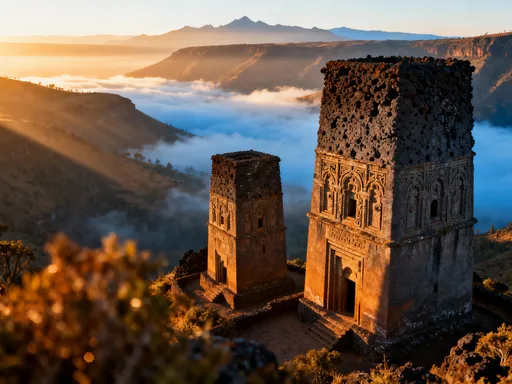
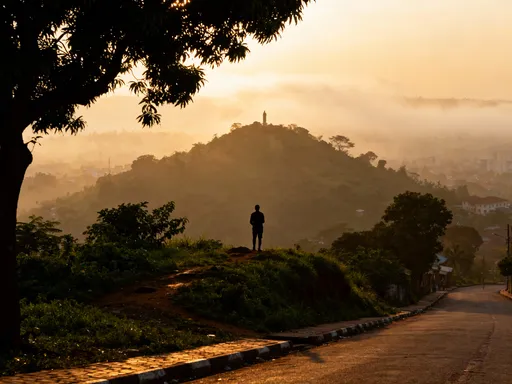
There is a moment, just before dawn, when the world feels suspended between dreams and reality. That is the perfect time to climb Bastos Hill, one of Yaoundé’s most iconic vantage points. Located in a quiet residential neighborhood known for its embassies and tree-lined streets, the hill offers a panoramic view that unfolds like a slow revelation. I arrived just before 6 a.m., guided by the soft glow of distant streetlamps and the occasional chirp of waking birds. The air was cool, carrying the scent of damp earth and eucalyptus, and the city below lay shrouded in a silken mist.
As the sky shifted from indigo to rose gold, the first rays of sunlight crept over the eastern ridge, gilding rooftops and awakening the city block by block. Smoke rose from early cooking fires, blending with the morning haze. Church bells rang out from multiple directions, their tones mingling with the distant hum of generators and the rhythmic call of a street sweeper’s broom. From this height, Yaoundé revealed its layered beauty—clusters of red-tiled roofs nestled in valleys, winding roads like ribbons through green hills, and the occasional glint of a glass tower catching the light.
What makes this view transformative is not just its visual richness, but the stillness that surrounds it. In that quiet hour, the city feels intimate, almost tender. You’re not just observing a skyline—you’re witnessing a city breathe. For those planning to visit, the best time to come is between 5:30 and 6:30 a.m., when the air is clearest and the light most poetic. The climb is manageable—about 20 minutes on foot from the main road—and safe during daylight hours. Wear comfortable shoes, bring a light jacket, and consider a small flashlight for the ascent. While there’s no official signage or tourist infrastructure, locals are accustomed to early risers and often offer a friendly nod or greeting.
Standing atop Bastos Hill, I realized that elevation does more than expand your field of vision—it shifts your emotional center. The worries that loom large at ground level shrink into perspective. From up here, Yaoundé isn’t a maze of traffic and noise; it’s a living organism, complex and beautiful. This kind of seeing—slow, intentional, unhurried—is the antidote to superficial tourism. It invites you to witness a place not as a checklist of attractions, but as a home to millions of daily lives.
Mokolo Market: Where Color Isn’t Just Seen—It’s Felt
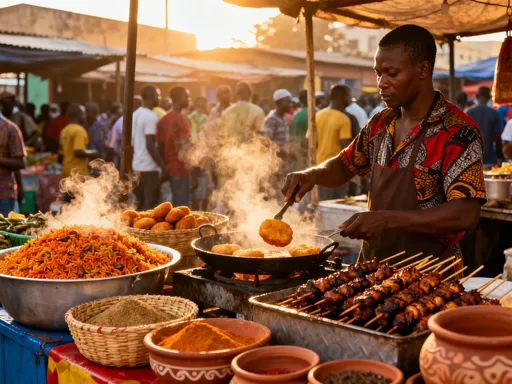
If Bastos Hill offers stillness, Mokolo Market delivers symphonic intensity. As one of the largest and most vibrant markets in Yaoundé, it is a place where sight becomes sensation. The moment you step inside, color assaults your eyes in the best possible way—mounds of turmeric glow like suns, baskets of kola nuts radiate deep burgundy, and bolts of wax-print fabric explode in patterns of gold, cobalt, and emerald. Vendors sit behind displays that look like abstract art installations: pyramids of yams, cascades of dried fish, necklaces of garlic strung like beads. The air thrums with voices, bartering in French, Ewondo, and Fulfulde, while the scent of chili, ginger, and roasting peanuts wraps around you like a warm cloth.
What sets Mokolo apart from ordinary markets is its density of cultural expression. Every item on sale tells a story—not just of utility, but of identity. Traditional raffia skirts hang beside smartphones; hand-carved wooden masks stand next to plastic water jugs. This is not a tourist bazaar staged for outsiders; it is a working marketplace where families come to buy, sell, and connect. To walk through Mokolo is to witness the living economy of a city, where commerce and culture are inseparable.
For visitors, the key to experiencing Mokolo respectfully lies in observation before participation. Photography should be approached with care—always ask permission before taking pictures of people, and never snap photos of sacred objects or private transactions. A smile and a simple “Puis-je prendre une photo?” go a long way. When engaging with vendors, patience is more valuable than fluency in French. A curious gaze, a respectful nod, or a willingness to learn the name of an unfamiliar fruit can open doors more effectively than money.
Practical tips enhance the experience: wear flat, sturdy shoes, as the ground is uneven and often damp; carry small bills for purchases; and avoid wearing flashy jewelry. The market is busiest between 9 a.m. and 2 p.m., so arriving early allows for calmer navigation. Most importantly, come with an open mind. Let yourself be overwhelmed. Let the colors blur, the sounds merge, the scents mingle. In that sensory overload, you begin to see not just the market, but the pulse of the city itself—a place where life is lived in full saturation.
The National Museum: Seeing History Through Art and Artifact
After the sensory whirl of Mokolo, the National Museum of Cameroon offers a space for reflection and deeper understanding. Located in a quiet neighborhood near the University of Yaoundé I, the museum is housed in a modest colonial-era building surrounded by gardens of frangipani and palm. Inside, its curated collection serves as a visual archive of the nation’s diverse heritage. With over 3,000 artifacts, the museum does not attempt to tell a single story, but rather to present a mosaic of identities—over 250 ethnic groups, each with distinct languages, traditions, and artistic expressions.
One of the most striking exhibits features ceremonial masks from the Grassfields region. Carved from wood and adorned with beads, cowrie shells, and natural pigments, these masks are not merely decorative—they are vessels of spiritual and social power. Used in rituals marking births, deaths, and initiations, they embody ancestral presence and communal memory. Standing before them, I was struck by the precision of their craftsmanship and the depth of meaning encoded in every line. Equally compelling are the displays of traditional textiles—kente cloth, raffia weavings, and indigo-dyed cotton—each pattern carrying symbolic significance related to status, lineage, or occasion.
The museum also addresses more complex chapters of history, including the colonial period. Photographs, documents, and everyday objects from the German and French administrations offer a sobering look at the forces that shaped modern Cameroon. These displays do not shy away from hardship, yet they emphasize resilience and cultural continuity. A particularly moving section highlights the role of women in preserving oral traditions, agriculture, and craft during times of upheaval.
Visiting the museum requires some planning. It is open Tuesday through Sunday, from 9 a.m. to 5 p.m., with a break for lunch. Entry fees are modest—around 3,000 CFA francs for adults—and guided tours in English or French can be arranged in advance through the reception desk. Photography is permitted in most areas, though flash is discouraged near delicate artifacts. Unlike larger, more commercial museums, this one thrives on intimacy. There are no interactive screens or audio guides—just quiet rooms, well-labeled displays, and the occasional curator eager to share knowledge.
What makes the National Museum so valuable is its role in shaping visual literacy. It teaches visitors how to see beyond surface beauty to the cultural narratives embedded in objects. In a world where Africa is often reduced to wildlife or poverty in media imagery, this museum restores complexity. It reminds us that heritage is not static—it is lived, adapted, and passed forward. To walk through its halls is to learn a new way of looking, one that honors context, history, and human ingenuity.
Boulevard de l’Unité at Dusk: The City’s Golden Hour Glow
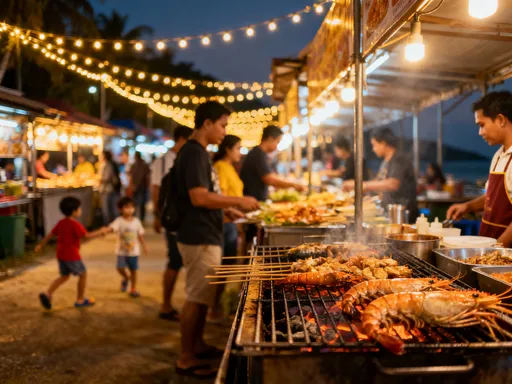
As the sun dips behind the western hills, Yaoundé undergoes a transformation. Nowhere is this more evident than along Boulevard de l’Unité, the city’s main thoroughfare. By day, it is a corridor of movement—buses, taxis, motorbikes, and pedestrians all vying for space. But at dusk, it becomes something else entirely: a stage for urban life in full expression. Streetlights flicker on, vendors ignite their kerosene lamps, and the pavement glows with reflections from puddles left by afternoon rain. The air, still warm, carries the sizzle of grilled meat, the sweetness of ripe mango, and the rhythmic beat of Afrobeat music spilling from passing cars.
Families emerge from their homes, strolling in clusters, children darting ahead with laughter. Couples sit on plastic stools sipping bissap juice, while older men gather under trees to play dominoes. The energy is relaxed but vibrant—a collective exhale after the day’s labor. Headlights dance across wet asphalt, creating shimmering trails, and the occasional police whistle cuts through the hum, not in warning, but in familiar rhythm. This is not nightlife as spectacle, but as ritual—a daily unwinding that belongs to the people.
The visual contrast between day and night on Boulevard de l’Unité is striking. Daylight reveals the city’s structure—its architecture, signage, and flow. But twilight reveals its soul. Colors deepen: the red of a woman’s dress, the gold of fried puff-puff, the green of a roadside plantain stand. Shadows lengthen, faces soften, and the city feels more intimate. For photographers and observers alike, this golden hour offers the richest palette. The low angle of the sun wraps buildings in warm light, and the interplay of artificial and natural illumination creates a dynamic, ever-changing scene.
To experience this moment safely, it’s best to arrive by car or taxi, especially if you’re unfamiliar with the area. Public transportation slows in the evening, and walking long distances after dark is not recommended for tourists. Many locals, however, move freely, and the atmosphere remains generally welcoming. Consider stopping at a sidewalk café for a glass of ginger beer or a plate of achu—boiled cocoyam served with spicy peanut soup. Let yourself linger. Let the city’s rhythm seep into your bones. In these quiet hours, Yaoundé ceases to be a destination and becomes a companion.
Escaping to the Outskirts: Nature’s Canvas Beyond the City
Even the most vibrant cities need contrast, and Yaoundé offers it in abundance just beyond its borders. A short drive—less than an hour—leads to landscapes that feel worlds away. One of the most accessible escapes is the Mbalmayo Forest Reserve, a protected area of dense tropical rainforest bisected by the Sanaga River. Here, the air is thick with the scent of wet leaves and blooming orchids. Towering mahogany and ebony trees form a canopy so complete that sunlight filters through in scattered coins. Birdsong echoes from every direction—tinkling, trilling, calling—while monkeys chatter in the upper branches.
The reserve offers walking trails of varying difficulty, from gentle riverside paths to more rugged climbs through secondary growth. Wooden bridges cross narrow streams, and wooden signs in French and English identify native species: the African gray parrot, the red duiker, the giant kingfisher. Local guides, often trained through conservation programs, are available at the entrance and provide invaluable insights into the ecosystem. They point out medicinal plants, explain animal tracks, and share stories of forest spirits that elders still speak of in hushed tones.
Another option is a visit to a rural village on the city’s periphery, where life unfolds at a different pace. In places like Minkoam, agriculture remains the heartbeat of the community. Women tend cassava fields, children herd goats, and elders sit under mango trees, discussing the day’s events. Homes are built from red clay and thatch, their walls painted with geometric patterns in ochre and white. There is no rush, no noise—just the slow, steady rhythm of daily life.
For travelers, these excursions offer more than scenic relief; they provide a counterpoint that deepens appreciation for the city. Distance allows you to see Yaoundé not as a standalone entity, but as part of a larger tapestry—urban and rural, modern and traditional, connected by roads, rivers, and shared culture. Practical tips for day trips include packing water, sunscreen, and insect repellent; wearing long sleeves and closed shoes; and bringing small gifts if visiting a village—school supplies or fabric are always appreciated. Transport can be arranged through local tour operators or by hiring a private driver for the day.
What lingers after such a journey is not just the beauty of the landscape, but the clarity it brings. Removed from the city’s intensity, you begin to see with sharper focus. The colors are purer, the sounds clearer, the silence more profound. And when you return to Yaoundé, you see it anew—not as chaos, but as harmony in motion.
Why Yaoundé’s Beauty Is More Than Skin Deep
After days of walking, watching, and wondering, I realized that Yaoundé had changed the way I see. It wasn’t just the views from hills or the vibrancy of markets that stayed with me—it was the shift in my own perception. True beauty, I learned, is not captured in a single photograph. It is revealed over time, through repeated glances, through listening, through waiting. Yaoundé does not give up its secrets quickly. It asks for patience. It asks for presence.
Too often, travelers approach Africa with preconceived images—endless savannas, wildlife migrations, or urban struggle. But cities like Yaoundé challenge those clichés. They are dynamic, layered, and deeply human. To see them fully, we must move beyond the surface. We must look not just with our eyes, but with curiosity, humility, and respect. We must allow ourselves to be surprised, to be disoriented, to be transformed.
Every place has a rhythm, and Yaoundé’s is steady, resilient, and quietly joyful. It lives in the early riser on Bastos Hill, the vendor at Mokolo, the child playing by the river, the curator lighting a lamp in the museum. It is not a city that performs for tourists. It simply lives. And in that living, it invites us to do the same—to slow down, to observe deeply, to connect authentically.
So if you go to Yaoundé, don’t rush. Don’t chase the perfect shot. Instead, let the city reveal itself. Sit on a bench at dusk. Watch a woman weave raffia. Listen to the rain on a metal roof. Let your eyes adjust to the light. Because in the end, seeing is not just about what you look at—it’s about how you choose to look. And in Yaoundé, that choice can change everything.