Castles in the Clouds: Gondar’s Royal Architecture Will Blow Your Mind
Imagine stepping into a highland kingdom where stone palaces pierce the sky, ancient fortresses guard centuries-old secrets, and every carved doorway tells a story. Gondar, Ethiopia—once the imperial capital—is home to Africa’s most unexpected architectural treasure: the majestic Fasil Ghebbi fortress complex. I was not prepared for how deeply its royal ruins would stir my soul. Standing beneath the shadow of a four-story castle built in the 1600s, surrounded by volcanic stone walls and silent courtyards, I felt a profound connection to a past that is too often overlooked. This is not a tale of colonial influence or imported design—it is a story of African innovation, royal ambition, and cultural pride carved in stone.
Arrival in the Highland Capital
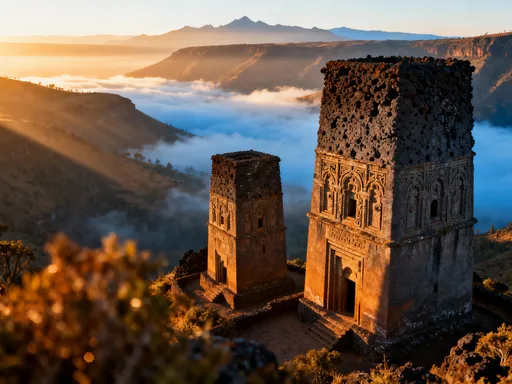
Gondar rests at an elevation of over 2,000 meters in northern Ethiopia, a city shaped as much by its altitude as by its imperial past. The air is crisp and thin, carrying a stillness that seems to honor the weight of history. As visitors approach, the skyline reveals a sight unlike any other in Africa: the silhouettes of castles rising above the highland mist. These are not European imports, nor are they modern recreations. They are authentic 17th-century royal compounds, built during the height of the Ethiopian Empire. Gondar served as the nation’s capital from the 17th to the 19th century, a period known as the Gondarine era, when Ethiopian monarchs established a centralized court and a distinctive architectural identity.
The city’s location was chosen with both strategic and symbolic intent. Positioned near the Simien Mountains and the Tekezé River, Gondar offered natural protection while also serving as a cultural crossroads. Merchants, scholars, and artisans from across the Horn of Africa, the Arabian Peninsula, and even the Mediterranean passed through its gates. This confluence of influences helped shape a unique urban landscape—one where African traditions merged with external ideas without losing their authenticity. Unlike many African cities whose historical narratives were reshaped by colonial powers, Gondar’s story remains rooted in indigenous sovereignty.
Today, travelers arrive by road from Bahir Dar or fly into the nearby airport at Gondar. The journey itself sets the tone. As the land climbs into the highlands, the terrain shifts from dry savannah to lush green plateaus dotted with eucalyptus trees and small farming communities. Upon arrival, the city greets visitors with quiet dignity. There are no grand tourist plazas or commercialized centers—just the enduring presence of stone towers and ancient churches. Gondar does not perform its history; it lives it. This is not merely a stop on a travel itinerary. It is an invitation to step into a different understanding of African civilization—one defined by sophistication, power, and architectural brilliance.
Fasil Ghebbi: The Royal Enclosure That Defies Time
At the heart of Gondar lies Fasil Ghebbi, a 70,000-square-meter fortress complex and the former residence of Ethiopian emperors. Designated a UNESCO World Heritage Site in 1979, this royal enclosure is one of the best-preserved examples of African royal architecture. Constructed beginning in 1636 by Emperor Fasilides, the complex served as the seat of imperial power for over two centuries. What makes Fasil Ghebbi so remarkable is not just its scale, but its architectural originality. The centerpiece, Fasilides’ Castle, rises four stories high with turrets, battlements, and arched windows that evoke European medieval fortresses—yet every stone was laid by Ethiopian craftsmen using local materials and techniques.
The compound includes six major structures: royal castles, a library, a banquet hall, stables, and a private chapel. Each building reflects both defensive necessity and royal grandeur. Thick stone walls, some over two meters wide, provided protection against invasions and withstood the test of time. Hidden corridors and elevated watchtowers reveal strategic foresight, while courtyards and decorative carvings speak to a refined courtly life. The castle’s interior features wooden beams, stone staircases, and small chambers that once housed the emperor, his family, and court officials. Though many interiors are now empty, their spatial design offers insight into how imperial life was organized—separated by function, status, and ritual.
What is often misunderstood is that these structures were not imitations of European castles. While they share visual similarities, their construction methods, layout, and cultural context are entirely Ethiopian. The use of volcanic basalt, lime-based mortar, and locally carved wood distinguishes them from any foreign model. Moreover, the complex was designed to reflect Ethiopian cosmology and royal symbolism. The orientation of buildings, the placement of gates, and the integration with the surrounding landscape all follow indigenous principles of order and harmony. Fasil Ghebbi is not a colonial echo—it is a sovereign statement.
The Fusion of Cultures in Stone
The architectural brilliance of Gondar lies in its synthesis of styles. During the 17th century, Portuguese Jesuit missionaries arrived in Ethiopia, bringing with them European design concepts, particularly from the Baroque and Renaissance periods. While their religious mission ultimately failed, their architectural influence endured—but not in the way one might expect. Rather than adopting European designs wholesale, Ethiopian builders absorbed select elements and reinterpreted them through their own artistic lens.
Arched gateways, domed roofs, and ornamental windows appear throughout Fasil Ghebbi, yet they are integrated with traditional Ethiopian features such as wooden balconies, hand-carved lintels, and thatched roofing in adjacent religious structures. The result is a harmonious blend that feels neither foreign nor derivative. This architectural dialogue was not one-sided. Ethiopian craftsmen adapted European forms to suit local climate, materials, and aesthetics. For example, the use of thick stone walls provides insulation against the highland cold, while elevated foundations protect against seasonal rains.
Even the construction materials reflect this cultural fusion. The mortar used in the castles is a unique blend of lime, molasses, and animal hair—a traditional Ethiopian technique that enhances durability and flexibility. Wooden beams, often made from indigenous acacia or eucalyptus, are intricately carved with geometric and symbolic patterns. These details are not decorative afterthoughts; they carry meaning, often referencing religious texts, royal lineage, or protective symbols. The architecture of Gondar is thus not just a visual achievement—it is a language written in stone and wood, expressing identity, faith, and resilience.
Beyond the Castle Walls: Gondar’s Hidden Architectural Gems
While Fasil Ghebbi draws the majority of visitors, Gondar’s architectural wonders extend far beyond the royal enclosure. Scattered throughout the city are lesser-known but equally significant sites that reveal the depth of its cultural heritage. One of the most breathtaking is Debre Berhan Selassie Church, a place of worship dating back to the 18th century. Though the original structure was destroyed during regional conflicts, the rebuilt church preserves its historic interior, including a ceiling adorned with over 200 hand-painted angels. Each face is unique, their wings detailed with precision, creating a celestial canopy that inspires awe and reverence.
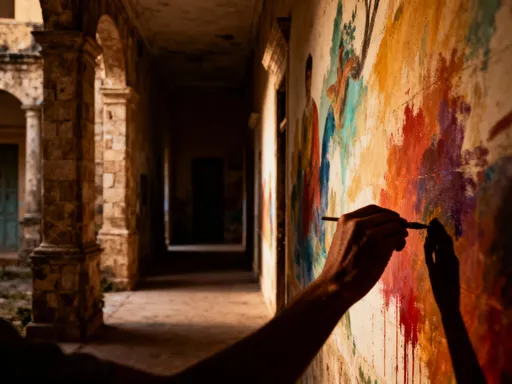
The church’s architecture follows traditional Ethiopian design: a rectangular nave with a thatched roof supported by wooden columns. What makes it exceptional is the preservation of its frescoes, which depict biblical scenes, saints, and protective symbols. These paintings are not merely artistic—they are spiritual texts, intended to educate and uplift the faithful. The use of bright colors, symbolic gestures, and stylized figures reflects a distinct visual tradition that has evolved over centuries. Visiting Debre Berhan Selassie is not just an architectural experience; it is a journey into the heart of Ethiopian Orthodox Christianity.
Another remarkable site is the royal bath of Emperor Fasilides, located near the Selassie Church. This structure was used during the Timket (Epiphany) festival, one of Ethiopia’s most important religious celebrations. The bath is an example of sophisticated hydraulic engineering, with channels designed to fill the pool with water from nearby springs. The surrounding pavilion, with its stone pillars and arched openings, provided shade and ceremonial space. Today, during Timket, thousands gather to reenact the baptism of Christ, transforming the ancient site into a living cultural event. These smaller structures prove that Gondar was not just a city of palaces, but a fully functioning imperial capital with religious, social, and administrative infrastructure.
Practical Tips for Exploring Gondar’s Architectural Wonders
Visiting Gondar is a deeply rewarding experience, but thoughtful preparation enhances both comfort and understanding. The city’s highland location means temperatures can vary significantly—cool in the morning and evening, warm during midday. Travelers should dress in layers and wear sturdy walking shoes, as the terrain includes uneven cobblestone paths and compacted earth surfaces. Sun protection is essential; hats, sunglasses, and sunscreen are recommended, especially when exploring open-air sites like Fasil Ghebbi.
One of the best ways to experience Gondar’s history is by hiring a certified local guide at the entrance to Fasil Ghebbi. These guides are trained by the Authority for Research and Conservation of Cultural Heritage and offer invaluable insights into the symbolism, construction, and historical context of the sites. Their storytelling brings the ruins to life, explaining not just what was built, but why—and who lived there. Most guides speak English fluently and welcome questions, making the visit both educational and personal.
Timing your visit can make a significant difference. Early morning hours, between 8:00 and 10:00 a.m., offer the best lighting for photography and the fewest crowds. It is also the coolest part of the day, making exploration more comfortable. Photography is permitted throughout most sites, though the use of tripods requires prior permission, especially inside churches and enclosed buildings. Visitors should be respectful of religious practices—many sites are still active places of worship.
Modest clothing is appropriate, particularly when visiting churches. Women may be asked to cover their heads, and both men and women should avoid wearing shorts or sleeveless tops. Public restrooms are limited, so it is wise to use facilities before entering major sites. Transportation between locations is affordable; local taxis, known as “blue donkeys” due to their color and number plates, are readily available. Always agree on the fare before starting the journey to avoid misunderstandings. With these practical considerations, travelers can focus on what truly matters: connecting with a legacy that transcends time.
Why Gondar Matters in African Architectural History
Gondar challenges long-standing misconceptions about African architecture. For too long, narratives about sub-Saharan Africa have emphasized oral traditions and temporary structures, often overlooking the continent’s rich history of monumental building. Gondar stands as undeniable proof that African civilizations developed sophisticated urban centers, complex engineering systems, and enduring architectural forms—long before European colonization. The castles of Fasil Ghebbi predate many colonial administrative buildings and reflect a powerful, self-governing empire.
What makes Gondar particularly significant is that its architecture was not imposed from the outside, nor was it a reaction to foreign influence. It emerged from within—a product of Ethiopian imperial vision, skilled craftsmanship, and cultural confidence. The Ethiopian Empire, one of the few African nations to resist colonization, maintained its sovereignty and developed its own institutions, including a unique architectural style. Gondar’s castles are not curiosities; they are declarations of independence, built by Africans, for Africans.
Moreover, the city’s planning reflects advanced urban design. The placement of royal, religious, and public buildings followed a deliberate order, integrating security, ceremony, and daily life. Water management systems, defensive walls, and multi-story construction demonstrate engineering knowledge that was both practical and innovative. In a global context where African achievements are often minimized or erased, Gondar serves as a powerful corrective. It reminds us that Africa’s empires were not passive recipients of history—they were its creators.
A Living Heritage, Not Just a Ruin
One of the most moving aspects of Gondar is that its heritage is not frozen in the past. These structures are not museum pieces behind glass; they are part of everyday life. During the Timket festival, the royal bath becomes a center of celebration, filled with water and surrounded by singing, dancing, and prayer. Local artisans sell hand-carved replicas of castle windows and church motifs, keeping traditional craftsmanship alive. Families gather near ancient walls, children play in shaded courtyards, and elders share stories passed down through generations.
Conservation efforts are ongoing, led by the Ethiopian government in partnership with UNESCO and international preservation organizations. Restoration projects focus on stabilizing structures, preventing erosion, and training local masons in traditional techniques. These initiatives do more than protect stone and mortar—they empower communities by creating jobs and fostering cultural pride. When a young artisan learns to carve a wooden beam using the same methods as their ancestors, they are not just preserving history—they are continuing it.
For visitors, this living quality transforms the experience. Walking through Gondar is not like touring a ruin in a distant land. It is like entering a conversation—one that began centuries ago and continues today. The stones speak, but so do the people. The castles stand as monuments, but they are also meeting places, classrooms, and sources of inspiration. This dynamic relationship between past and present is what makes Gondar truly unique. It is not a relic to be observed from afar, but a heritage to be felt, understood, and respected.
Conclusion: More Than Stones and Stories
Gondar’s castles are not just architectural feats—they are acts of identity. They stand as enduring symbols of a proud and independent African civilization that built its own palaces, developed its own style, and ruled its own destiny. To visit Gondar is to witness a different narrative of Africa—one defined not by hardship or external intervention, but by innovation, dignity, and cultural richness. These structures invite us to look beyond stereotypes, to recognize the depth of Ethiopia’s historical contributions, and to appreciate the artistry that flourished in the highlands long before the modern era.
More than just monuments, the castles of Gondar are bridges—between past and present, between memory and meaning, between one generation and the next. They remind us that history is not only written in books, but carved in stone, painted on walls, and carried in the voices of those who live among them. Visiting Gondar is not about checking a destination off a bucket list. It is about standing where kings once walked, touching walls that have withstood centuries, and listening to the quiet whispers of a legacy that refuses to be forgotten. In a world that often overlooks Africa’s monumental achievements, Gondar stands tall—castles in the clouds, rooted firmly in pride.